


Explore your piece’s framing and signature options


Preserving the Uniqueness of Christina Villa’s Paintings
Christina’s artwork features organic color blends, rich textures, and metallic elements. These paintings respond to light, creating movement and guiding each viewer on an independent journey. To maintain the individuality and beauty of her creations, below are recommendations for framing, placement and transport.
Transportation:
When transporting unframed artwork, it is essential to always keep it flat, it should never be rolled, bent, or folded, as these actions can cause irreversible damage and affect the integrity of the piece. To protect the paintings from moisture and other environmental hazards during transport, the use of archival-safe materials is strongly recommended such as glassine paper or acid-free tissue paper as they provide ideal protection.
Framing:
When framing it is important not to stretch the artwork. Stretching is unnecessary and can change the painting’s original qualities, such as its texture and how it reflects light. Additionally, as a sensitive watercolor, even minimal contact with liquid can cause damage. Instead, keep the painting in its natural state, preserving its texture and movement. Frame with or without matting according to personal preference. Floating framing is also an alternative.
For protection and optimal viewing, use museum glass or other high-grade clear acrylic alternatives that offer excellent clarity and minimal glare. This helps maintain the painting’s response to light while safeguarding it from dust and environmental damage. Alternatively, leaving the painting without a glass front is an option; however, as a watercolor artwork, it will be exposed to the elements. Many collectors have chosen this approach as well, keeping in mind the increased risk of exposure.
Installation:
When choosing a location to display Christina’s paintings, consider the room’s lighting and environment. Place the artwork in spaces with access to natural sunlight or where the light changes throughout the day. This enhances the painting’s dynamic interaction with light, allowing viewers to fully experience its movement and vibrant qualities. Avoid placing the painting in corners or hallways that lack sufficient light, as this can diminish its visual impact and prevent the artwork from revealing its unique response to illumination.
Artist Signature Placement
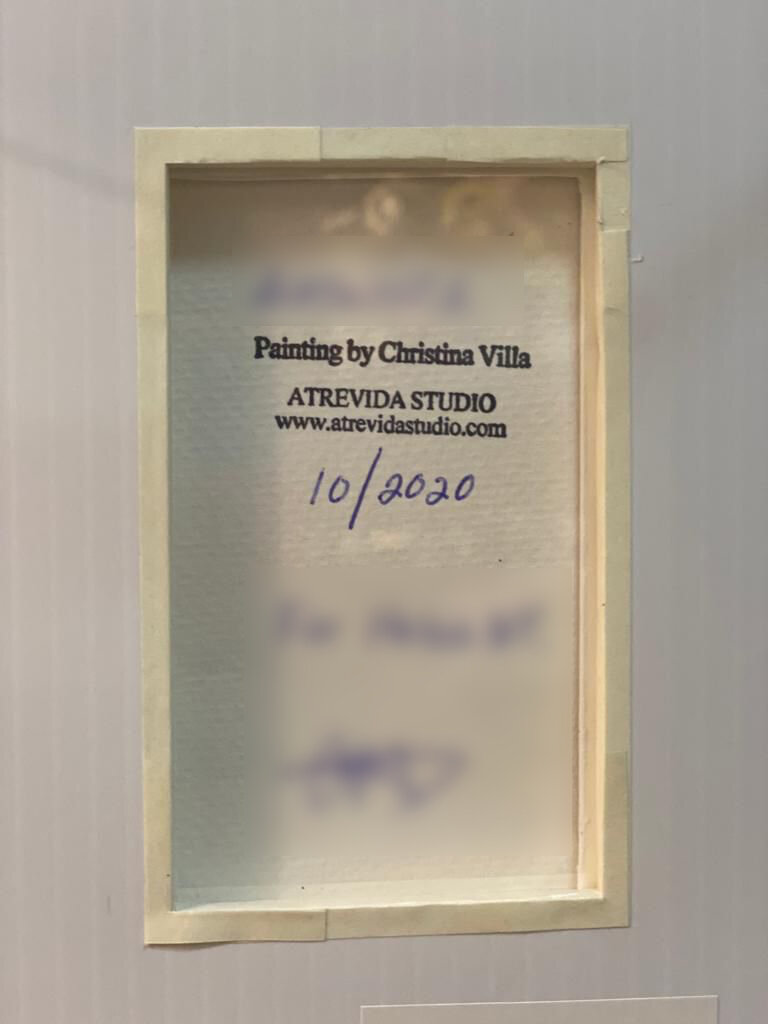
Christina signs and dates all her paintings on the reverse side. This approach preserves the undefined nature of her artwork, allowing each viewer to decide how the piece is oriented—top, bottom, and sides are intentionally left open to interpretation.
If a preferred orientation is chosen, Christina can sign the painting on the front upon request.
If you are looking for a framing shop in NYC check out our friends at @framingon9th

Underwater Springtime found its place in a teenager’s room who hand picked it because he loved the ocean feel of the painting.